

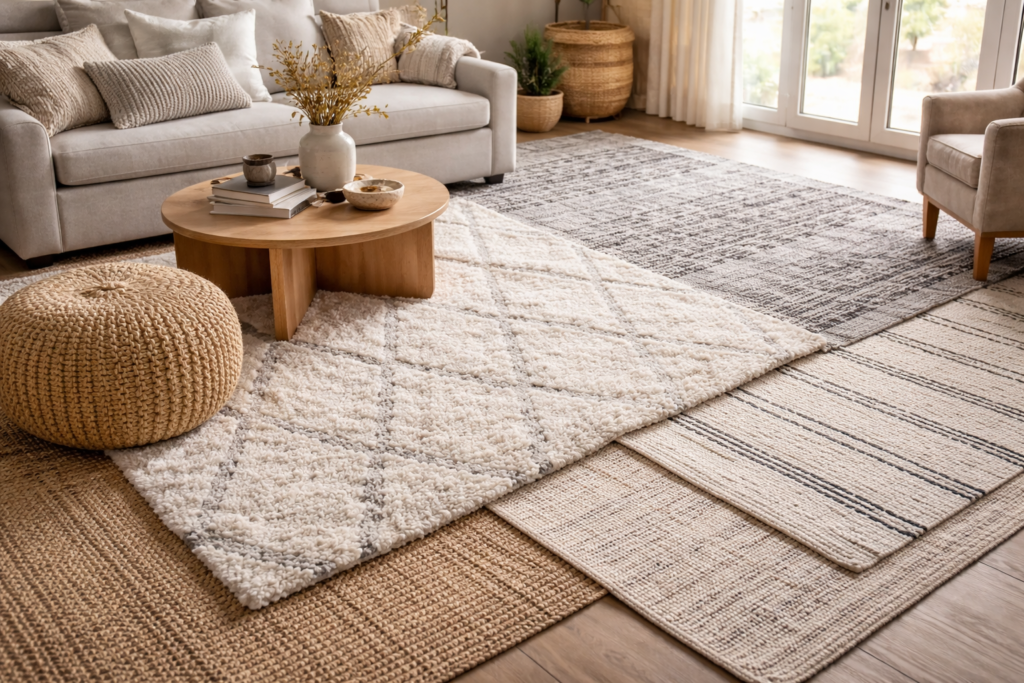
Choosing a rug is not just about color or pattern. The material you choose affects how the rug feels, how long it lasts, and how it performs in your space. The best rug material for a busy living room looks very different from the best rug material for a bedroom or dining area.
If you have ever loved how a rug looked online but felt disappointed once it arrived, the material was likely the issue. This guide breaks down the most common rug materials, where they work best, and how to choose the best rug material for your lifestyle.
Why Rug Material Matters More Than You Think
Rug material controls comfort, durability, maintenance, and even how a room sounds. A plush wool rug absorbs noise and feels soft underfoot. A flatwoven jute rug brings texture but feels firm and structured. Synthetic rugs handle spills better but feel different than natural fibers.
The best rug material balances appearance with real life use. Pets, kids, foot traffic, and sunlight all matter when you make your choice.
Wool Rugs: A Classic for a Reason
Wool is often considered the best rug material for living spaces, and for good reason.
Wool rugs feel soft, insulate well, and bounce back after heavy foot traffic. The fibers resist dirt naturally, which helps rugs look cleaner between vacuuming. Wool also holds dye beautifully, which creates rich colors and detailed patterns.
Best for:
- Living rooms
- Bedrooms
- Offices
- Moderate to high traffic areas
Things to know:
- Wool can shed at first
- It requires regular vacuuming
- It costs more than synthetic options
If you want a timeless rug that lasts for years, wool often stands out as the best rug material overall.
Cotton Rugs: Lightweight and Casual
Cotton rugs feel relaxed and easy. They work well in casual spaces and layer nicely with other rugs.
Cotton does not hold up to heavy traffic like wool, but it offers flexibility. Many cotton rugs are washable, which makes them appealing for kitchens or kids spaces.
Best for:
- Kitchens
- Playrooms
- Bedrooms
- Layering with larger rugs
Things to know:
- Cotton wears faster than wool
- It stains more easily
- It works best in low traffic areas
Cotton can be the best rug material when you want something simple, soft, and easy to swap out.
Jute and Sisal Rugs: Natural Texture and Structure
Jute and sisal rugs add texture first and comfort second. These natural fibers create a clean, grounded look and pair well with modern or coastal interiors.
Jute feels softer than sisal, while sisal feels more structured and durable. Neither handles moisture well, so placement matters.
Best for:
- Dining rooms
- Entryways
- Living rooms with light traffic
- Layered rug designs
Things to know:
- They feel rough underfoot
- They stain easily
- They do not like moisture
For texture-driven spaces, jute or sisal can be the best rug material visually, even if comfort is not the top priority.
Synthetic Rugs: Durable and Budget Friendly
Synthetic rugs include materials like polypropylene and polyester. These rugs excel in durability and stain resistance, which makes them popular for high traffic homes.
Modern synthetic rugs look far better than older versions. Many mimic wool while offering easier maintenance.
Best for:
- Homes with pets or kids
- Outdoor or indoor-outdoor spaces
- High traffic areas
- Budget focused projects
Things to know:
- They feel less natural than wool
- They may flatten over time
- Quality varies widely
For practical spaces, synthetic options often become the best rug material choice.
Blended Rugs: The Best of Both Worlds
Many rugs combine natural and synthetic fibers. Blends balance softness, durability, and price.
A wool blend rug can reduce shedding while improving stain resistance. A cotton blend can improve structure and longevity.
Blended rugs often offer the best rug material for households that want performance without sacrificing feel.
How to Choose the Best Rug Material by Room
Choosing the best rug material gets easier when you focus on the room first.
Living Room
Wool or wool blends perform best. Synthetic rugs also work well for busy households.
Bedroom
Wool and cotton feel soft and warm underfoot. Comfort matters most here.
Dining Room
Flatwoven wool, jute, or low pile synthetic rugs work best. Easy cleaning matters.
Entryway
Synthetic or flatwoven wool rugs handle traffic and dirt better.
Kitchen
Cotton or synthetic rugs offer easier maintenance and flexibility.
Final Thoughts on Choosing the Best Rug Material
The best rug material supports how you live, not just how your home looks. A rug should feel good to walk on, hold up over time, and fit naturally into your daily routine.
Before you buy, ask yourself:
- How much foot traffic will this rug see
- Do I need stain resistance
- Do I want softness or structure
- How often will I clean it
When you match the material to the space, you create a rug choice that feels intentional and lasting. That is how you choose the best rug material for your home.
Explore thoughtfully crafted rugs and find the perfect material for your space here.