
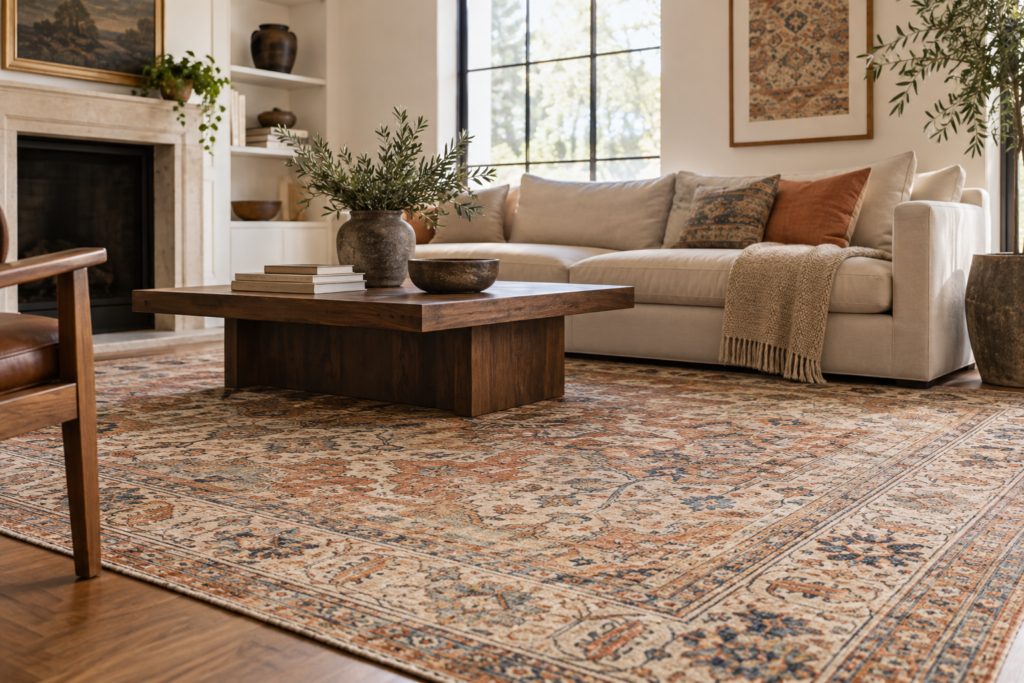
A handmade rug can completely transform a room. Beyond adding color and texture, the right rug can define a space, bring furniture together, and add character that is difficult to achieve with mass-produced decor.
However, choosing a handmade rug involves more than finding a pattern you like. Size, material, construction, color, and placement all play an important role.
Whether you are shopping for a vintage rug or considering a custom rug designed specifically for your space, here is what to consider before making your choice.
Why Choose a Handmade Rug?
Handmade rugs are created using traditional techniques that require skill, time, and attention to detail. Unlike mass-produced rugs, handmade pieces often have subtle variations in their patterns, colors, and weaving.
These differences are part of what gives each rug its individual character.
High-quality handmade rugs can also last for decades when properly cared for. Materials such as wool, cotton, and silk can provide both durability and a luxurious appearance.
For homeowners who want something truly unique, a custom handmade rug offers even more flexibility. The size, colors, materials, and design can all be selected to complement a specific room.
1. Start With the Right Rug Size
One of the most common mistakes when choosing a rug is selecting one that is too small.
A properly sized rug helps visually connect the furniture and makes the room feel more intentional.
Living Room
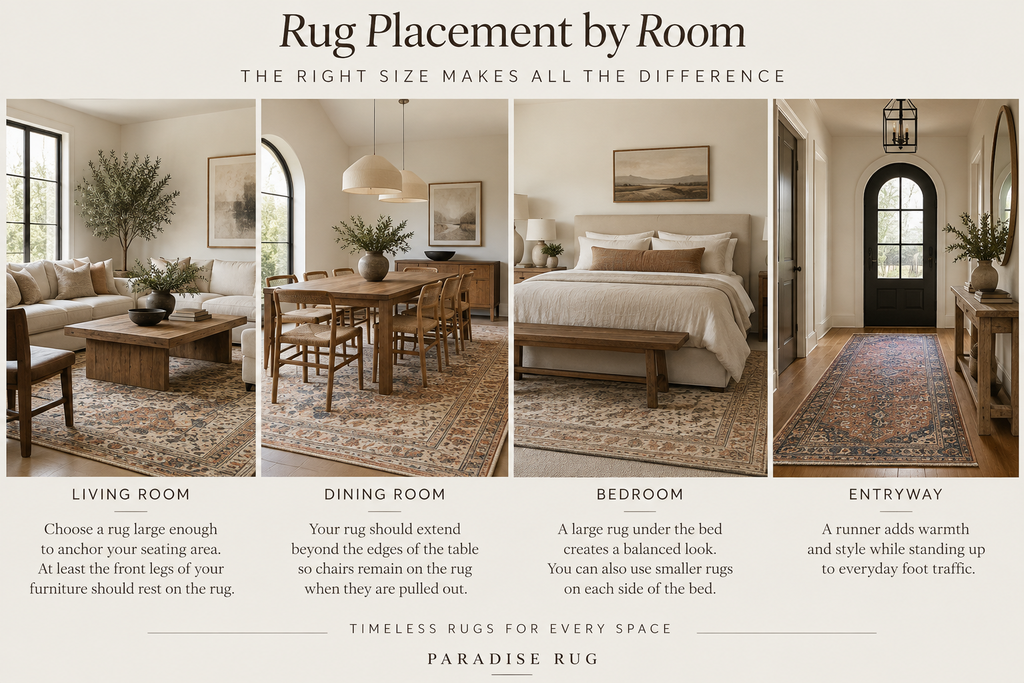
For a living room, choose a rug large enough to anchor the main seating area. Ideally, at least the front legs of your sofa and chairs should rest on the rug.
Larger rooms may benefit from a rug that fits underneath the entire furniture arrangement.
Dining Room
Your dining room rug should extend beyond the edges of the table so chairs remain on the rug when they are pulled out.
Bedroom
A large rug placed underneath the bed can create a comfortable and balanced look. Another option is to use smaller rugs along each side of the bed.
If standard rug dimensions do not work with your room, a custom rug can be designed specifically for the space.
2. Choose the Right Material
The material affects how a rug looks, feels, wears, and responds to everyday use.
Wool Rugs
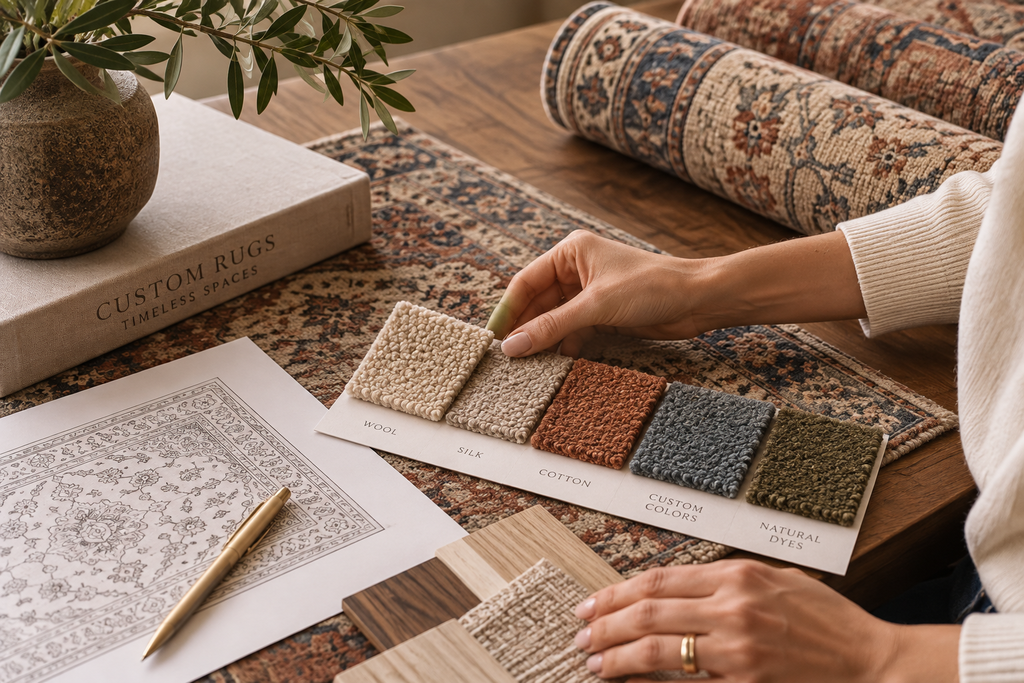
Wool is one of the most popular materials for handmade rugs. It is durable, comfortable, and well suited for areas that receive regular foot traffic.
Silk Rugs
Silk creates an exceptionally soft texture and can give detailed patterns a beautiful sheen. Because silk is more delicate, these rugs are often best suited for lower-traffic areas or spaces where they can be carefully maintained.
Cotton Rugs
Cotton is versatile and can be used on its own or incorporated into the foundation of handmade rugs. It can be a practical option depending on the construction and intended use of the rug.
When selecting a material, think about how the room is actually used rather than making a decision based only on appearance.
3. Consider the Colors Already in Your Room
A rug does not necessarily need to match every color in the room. Instead, it should help create a connection between the major elements of the space.
Look at your:
Furniture
Wall colors
Flooring
Curtains
Artwork
Accent pieces
If the room already contains several bold colors and patterns, a more understated rug can create balance.
For a neutral room, a colorful or intricately patterned rug can become the focal point.
Handmade rugs created with natural dyes can also offer subtle variations in color that give the finished piece additional depth and character.
4. Decide Between Traditional and Contemporary Designs
Handmade does not have to mean traditional.
Traditional rugs can feature detailed borders, repeating motifs, floral elements, medallions, and designs influenced by generations of weaving traditions.
Contemporary handmade rugs may use geometric patterns, abstract designs, simplified shapes, or more minimal color palettes.
The best choice depends on the feeling you want to create.
Traditional patterns can add warmth and history to contemporary spaces, while a modern rug can provide contrast in a more traditional home.
5. Think About Foot Traffic
Where you plan to place the rug matters.
Entryways, living rooms, and other frequently used areas need rugs capable of handling more wear. Bedrooms and formal spaces generally experience less foot traffic and may be appropriate for more delicate materials.
If you have children or pets, durability and maintenance should also factor into your decision.
Choosing the appropriate construction and material from the beginning can help your rug remain beautiful for years.
6. Look at the Craftsmanship
A handmade rug represents many hours of skilled work.
When evaluating a rug, look beyond the design and consider its construction. The weaving technique, materials, pattern complexity, finishing, and overall consistency can tell you a great deal about its craftsmanship.
Small irregularities do not necessarily indicate poor quality. In handmade pieces, subtle variations can be evidence that the rug was created by hand rather than produced by a machine.
An experienced rug professional can also help explain a rug’s construction, origin, and unique characteristics.
7. Consider a Custom Rug
Sometimes the perfect rug simply does not exist in a standard collection.
An unusual room shape, specific color palette, or particular design vision may call for something custom.
A custom handmade rug allows you to select important details such as:
- Dimensions
- Materials
- Colors
- Patterns
- Design style
- Overall look and feel
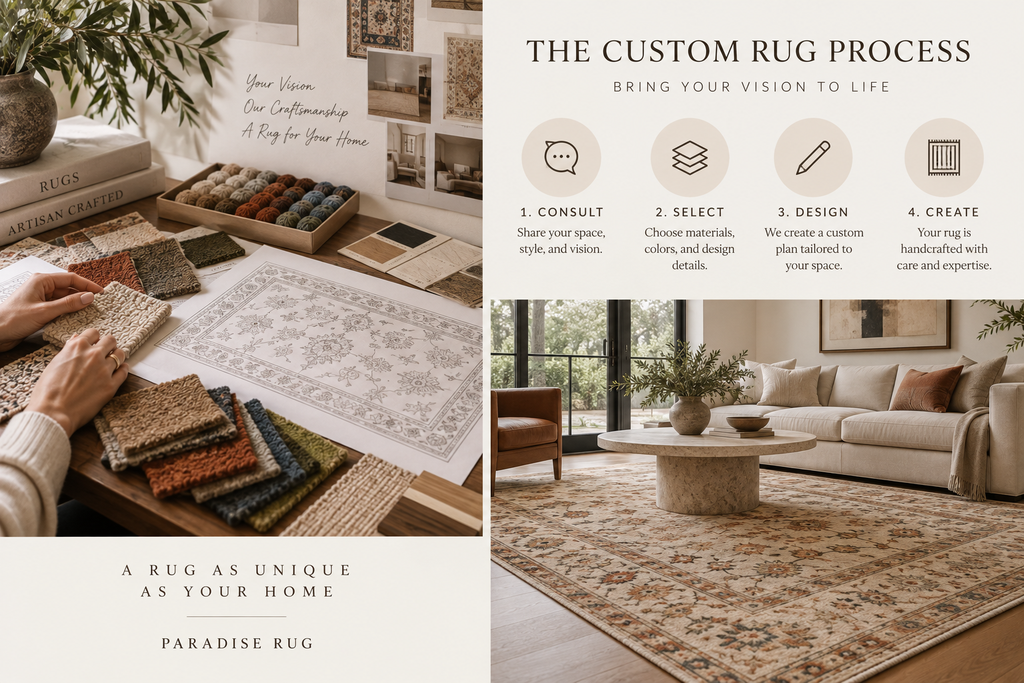
At Paradise Rug, our custom rug process begins with understanding your space, style, and vision. From there, materials and design details can be selected to create a rug specifically for your home.
Caring for Your Handmade Rug
Once you find the right rug, proper care can help protect your investment.
Regularly remove surface dirt, address spills quickly, and periodically rotate the rug to encourage more even wear. Handmade and vintage rugs may also require specialized professional cleaning rather than standard household cleaning methods.
If your rug becomes damaged, professional repair or restoration may be able to address worn areas while preserving the character of the original piece.
Find the Perfect Rug at Paradise Rug
A great rug should feel like it belongs in your home.
Paradise Rug specializes in handmade, vintage, and custom rugs crafted with an emphasis on quality materials and traditional craftsmanship. We also provide professional rug repair, restoration, and appraisal services.
Visit Paradise Rug in San Francisco to explore our collection or speak with our team about creating a custom rug designed specifically for your space.
Contact Paradise Rug today to get started.