
A beautiful handmade rug can hold its color for decades, but where you place it in your home can have a major impact on how it ages.
One of the most common causes of fading in area rugs is prolonged exposure to sunlight. Over time, ultraviolet light can gradually alter dyes, creating areas that appear lighter or less vibrant than the rest of the rug.
The good news is that fading does not mean you have to keep your favorite rugs hidden away. With thoughtful placement and proper care, you can help preserve their colors while continuing to enjoy them every day.
Here is what every rug owner should know about sunlight, fading, and protecting a handmade rug.
Why Does Sunlight Fade Rugs?
Sunlight contains ultraviolet radiation that can gradually break down pigments and dyes.
Think about what happens to outdoor furniture, fabrics, photographs, and artwork when they sit in direct sunlight for years. Rugs can experience a similar process.
The amount of fading depends on several factors, including:
- The rug’s dyes
- Fiber type
- Intensity of sunlight
- Length of daily exposure
- Position within the room
- Age and condition of the rug
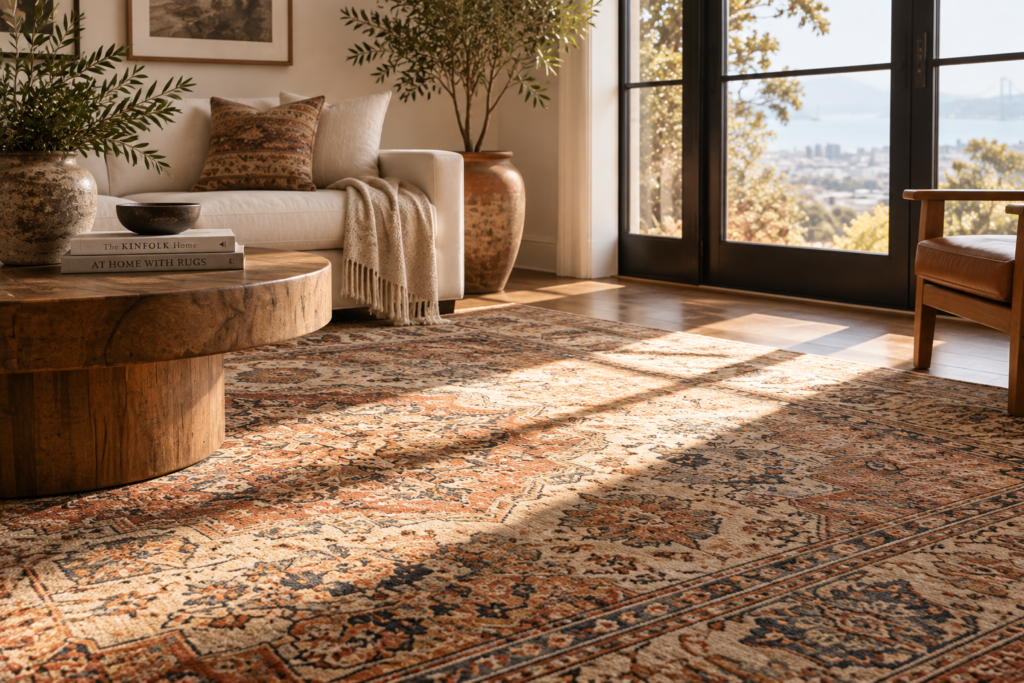
A rug sitting in strong afternoon sunlight every day will generally experience more UV exposure than one placed in an interior room with limited natural light.
Are Handmade Rugs More Likely to Fade?
Not necessarily.
Handmade rugs can be incredibly durable, and many antique rugs have maintained beautiful colors for generations. However, handmade rugs often contain natural fibers and may use traditional dyeing methods that respond differently to light than modern synthetic materials.
This variation is also part of their beauty.
Colors in a handmade rug may develop greater depth and character as the piece ages. Gradual aging is different, however, from significant uneven fading caused by one section receiving substantially more sunlight than another.
Natural Dyes vs. Synthetic Dyes
The type of dye used in a rug can affect how its colors change over time.
Historically, rug makers created colors using materials derived from plants, roots, insects, minerals, and other natural sources. These traditional dyes can produce complex colors with subtle variations throughout a rug.
Modern rugs may also use synthetic dyes, which can offer excellent color consistency and a broad range of shades.
Neither category automatically guarantees that a rug will never fade. Dye quality, fiber type, craftsmanship, age, and environmental conditions all contribute to how a rug responds to light.
For valuable, vintage, or antique rugs, a professional can help identify characteristics of the rug and recommend appropriate care.
How to Tell If Your Rug Is Fading
Sun fading often happens so gradually that you may not notice it at first.
One simple way to check is to look underneath furniture.
Move a sofa leg, table, or other piece of furniture that has remained in the same position for a long time. If the covered portion of the rug appears noticeably darker or more vibrant, the exposed areas may have experienced fading.
You can also compare sections near windows with areas farther inside the room.
Uneven fading may be particularly noticeable when only one side of a rug receives strong direct sunlight.
1. Rotate Your Rug Regularly
One of the simplest ways to promote more even aging is to rotate your rug.
Turning the rug 180 degrees periodically changes which sections receive the greatest amount of sunlight and foot traffic.
Rotation can also help distribute everyday wear more evenly, particularly in living rooms and dining rooms where furniture placement creates predictable walking paths.
How frequently you should rotate a rug depends on the room and its exposure. A rug receiving strong sunlight may benefit from more frequent attention than one in a shaded area.
2. Pay Attention to Your Windows
Take a look at your room throughout the day.
Where does direct sunlight fall at 9 a.m.? What about noon or late afternoon?
The answer may surprise you.
A room that seems relatively shaded in the morning could receive several hours of intense afternoon sunlight.
Understanding how light moves through your home makes it easier to identify rugs that may be receiving significant UV exposure.
3. Use Window Treatments
Curtains, shades, and blinds can help control the amount of direct sunlight entering a room.
You do not need to keep your home dark.
Instead, consider closing window treatments during the hours when sunlight is strongest, particularly if direct light falls across a valuable handmade or antique rug.
UV-filtering window treatments can also provide additional protection while allowing natural light into the room.
4. Rearrange Furniture Thoughtfully
Furniture placement can unintentionally create uneven fading.
For example, imagine a large coffee table covering the center of a rug for ten years while the surrounding areas remain exposed to sunlight. If the rug eventually moves to another room, the difference between the protected and exposed sections could become noticeable.
Occasionally changing furniture placement, when practical, can help prevent sharply defined protected areas.
5. Be Careful With Antique and Vintage Rugs
Older rugs deserve particular attention.
An antique rug has already experienced decades, and sometimes generations, of use and environmental exposure. Its colors, fibers, and construction may respond differently than those of a newly manufactured rug.
Before attempting to clean, treat, repair, or restore an older rug yourself, consider speaking with a rug professional.
The goal should be to preserve the rug’s character rather than make an older piece look artificially new.
Can a Sun-Faded Rug Be Restored?
It depends on the rug and the extent of the damage.
Professional rug restoration may be able to improve certain types of color loss or damage, but restoration is specialized work. The appropriate approach depends on the rug’s materials, construction, dyes, age, and overall condition.
This is particularly important with handmade, antique, and valuable rugs.
Attempting to recolor a rug using household dyes or DIY treatments can create permanent problems and may make professional restoration more difficult.
If you are concerned about fading, have the rug evaluated before attempting to alter it yourself.
Fading Is Not Always a Bad Thing
There is an important distinction between damage and natural aging.
Many handmade and antique rugs develop a softer appearance as they age. Colors can mellow, fibers can develop character, and the overall rug can acquire a patina that would be impossible to reproduce in a new piece.
For many collectors and homeowners, these characteristics are part of the appeal of vintage rugs.
The goal of proper rug care is not necessarily to stop every sign of aging. It is to prevent unnecessary damage while allowing a well-made rug to age naturally and beautifully.
Protecting a Rug Is About the Long Term
A quality handmade rug is not simply another decorative accessory.
With appropriate care, it can remain part of a home for decades and may eventually be passed from one generation to another.
Simple habits such as monitoring sunlight, rotating the rug, controlling direct UV exposure, and seeking professional care when necessary can make a meaningful difference over time.
Professional Rug Care and Restoration in San Francisco
If you have noticed fading, discoloration, wear, or damage on a handmade rug, Paradise Rug can help you understand your options.
Paradise Rug specializes in handmade rugs and provides professional rug repair, restoration, and appraisal services in San Francisco. Whether you are caring for a newer handmade rug or preserving a treasured vintage piece, proper professional care can help protect its beauty and craftsmanship for years to come.
Contact Paradise Rug to learn more about professional rug care, restoration, or finding a handmade rug for your home.